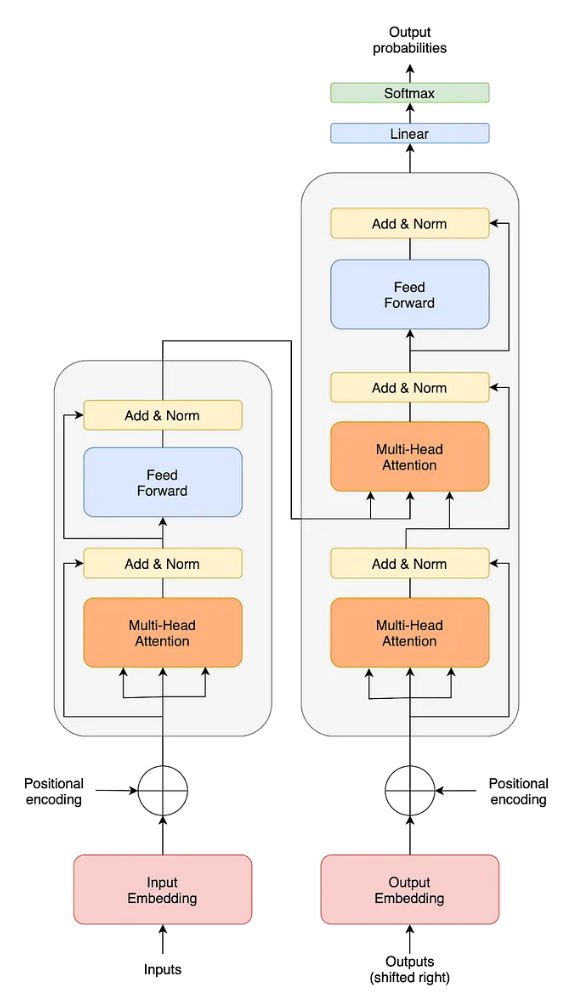
Generative AI is transforming the way machines create text, images, audio, video, and even code. Instead of only analyzing or classifying data, generative models learn patterns from large datasets and produce new content that resembles human-created output. To understand how Generative AI works, it is important to break it into its major components.
1. Data
Data is the foundation of every Generative AI system. Models learn from massive datasets containing text, images, speech, code, or other structured and unstructured information. The quality, diversity, and scale of the data directly affect the quality of generated output. If training data is limited or biased, the model’s output will also reflect those limitations.
2. Tokenization
Before data can be processed by the model, it must be converted into smaller units called tokens. In text models, tokens may be words, subwords, or characters. Tokenization allows language models to transform human language into a numerical format that neural networks can understand. This is a critical step because the model predicts one token at a time while generating content.
3. Embeddings
Embeddings are mathematical vector representations of tokens, words, or pieces of content. They help the model capture meaning, similarity, and relationships between concepts. For example, words like “king” and “queen” may have similar embedding structures because they share semantic meaning. Embeddings allow AI systems to understand context instead of only memorizing words.
4. Neural Network Architecture
The neural network is the core engine of Generative AI. Modern systems often use Transformer architecture because it handles long-range dependencies and context more efficiently than older recurrent models. The architecture determines how information flows through the model and how it learns patterns from training data.
5. Attention Mechanism
Attention is one of the most important innovations in Generative AI. It helps the model focus on the most relevant parts of the input while producing output. Instead of treating all words equally, attention allows the model to decide which previous words or features matter most for the next prediction. This greatly improves coherence, context understanding, and response quality.
6. Training Process
Training is the phase where the model learns patterns from data. During training, the model predicts missing or next elements and compares its prediction with the actual answer. The error is measured using a loss function, and the model updates its internal weights using optimization techniques such as gradient descent. Over time, the model becomes better at generating meaningful output.
Posted in Generative AI Research Paper • views
7. Parameters
Parameters are the internal values the model learns during training. These values store the relationships, structures, and patterns extracted from data. Large language models may have millions or billions of parameters, which is one reason they can generate sophisticated and context-aware responses.
8. Decoder or Generation Module
In many Generative AI systems, the decoder is responsible for producing the final output. It generates text, image pixels, sound waves, or other forms of content step by step. In language models, the decoder predicts the next token repeatedly until a full response is formed.
9. Fine-Tuning
After general training, a model can be fine-tuned on specific datasets for specialized tasks. Fine-tuning helps adapt the model for domains such as healthcare, law, coding, education, or customer support. This improves performance in targeted applications while keeping the general knowledge learned during pretraining.
10. Prompting
Prompts are the instructions or input given to a Generative AI system. The quality of the prompt often affects the quality of the output. Clear and detailed prompts help the model generate more accurate, relevant, and useful responses. Prompt engineering has become an important skill in working with modern AI tools.
11. Inference
Inference is the stage where the trained model is used to generate new content. Unlike training, inference does not update the model’s weights. It only applies learned knowledge to respond to user input. This is the part users interact with directly when using chatbots, image generators, or code assistants.
12. Safety and Alignment
Generative AI systems must include safety mechanisms to reduce harmful, biased, or misleading outputs. Alignment ensures that the model follows intended human values and behaves responsibly. This includes content moderation, reinforcement learning, human feedback, and rule-based safeguards.
13. Evaluation
Evaluation measures how well the model performs. Metrics may include fluency, accuracy, coherence, creativity, relevance, and factual correctness. Human evaluation is also important because machine-generated content must often be judged by usefulness and trustworthiness, not only numbers.
14. Deployment Infrastructure
Once trained, Generative AI needs infrastructure for deployment. This includes GPUs or TPUs, APIs, cloud services, storage systems, and monitoring tools. Efficient deployment ensures the model can serve users at scale with low latency and high reliability.
15. Feedback Loop
A feedback loop helps continuously improve Generative AI systems. User feedback, performance logs, and error analysis are used to refine prompts, retrain models, improve fine-tuning, and strengthen safety measures. This makes the system more effective over time.
Conclusion
Generative AI is not just a single algorithm but a combination of multiple interconnected components. From data collection and tokenization to embeddings, transformers, training, prompting, inference, and safety, each part plays a crucial role in generating intelligent content. Understanding these components helps us better appreciate how Generative AI works and how it can be applied responsibly in the real world.
Here is a shorter social-media/blog style version too:
Generative AI works through several key components: data, tokenization, embeddings, neural networks, attention mechanisms, training, parameters, decoding, fine-tuning, prompting, inference, safety, evaluation, and deployment. Together, these components allow AI systems to learn patterns from large datasets and generate human-like text, images, audio, and code. Understanding these building blocks is essential for anyone exploring modern artificial intelligence.
I can also turn this into a professional LinkedIn post, college assignment answer, or SEO-friendly website article.